
Since the start of the pandemic, smart working has become a byword for modern, innovative and successful companies. Companies you want to work for.
WHAT IS SMART WORKING
No fixed working hours, no fixed workplace: work whenever and wherever you like, as long as you meet your targets. That is how performance is measured; the quality of the work comes first and the time invested is subordinate to the goal, meaning that no fixed working hours are agreed.
The employee is paid for X hours, which have been estimated as sufficient to achieve one or more goals. If the employee needs less time, they are still paid for the agreed period. If they need longer, the extra hours are not paid (although every company may have a slightly different remuneration model).
Working together with colleagues carries a lot of weight and is taken to a new level by innovative technologies.
Smart working therefore seems to be a hybrid of freelancing and employment that combines self-determination with employee benefits; the best of both worlds?
THE ADVANTAGES OF SMART WORKING
There is no denying that smart working offers many advantages and represents a modern way of working. It gives employees a freedom that until recently was reserved for the self-employed.
More flexibility
Flexibility comes first, then. Picking the children up from nursery earlier? Planning a longer weekend? Spending two months in Bali? If the plan falls through, it certainly will not be work that is to blame. All of this becomes possible because you can organise your time yourself.
There is also no idle time, no working hours that have to be "sat out" in order to fill up the eight hours a day.
The company can also provide an alternative workplace, often in an open-plan office. It is set up according to particular criteria so that it is inviting and increases concentration and productivity. Open areas for relaxation are provided, and these are also intended to encourage interpersonal relationships and social contact within the company.
Every employee is free to decide when and for how long they want to work at a particular place. The company's goal is to create the best possible conditions to help employees deliver high-quality work.
Saving resources
Another advantage is the saving of stress, time and money. Anyone working from home will not have to sit in traffic in the morning and may not need a public transport season ticket either. Nor do you have to do a lot of juggling or delegate responsibilities when the children are ill, the plumber has announced a visit, or you would simply rather be at home for other reasons.
Paying attention to your personal energy balance and looking after it will, in the long term, lead to a more positive outlook on life and a higher quality of life.
These advantages may fall away if you prefer a place of work other than your own home.
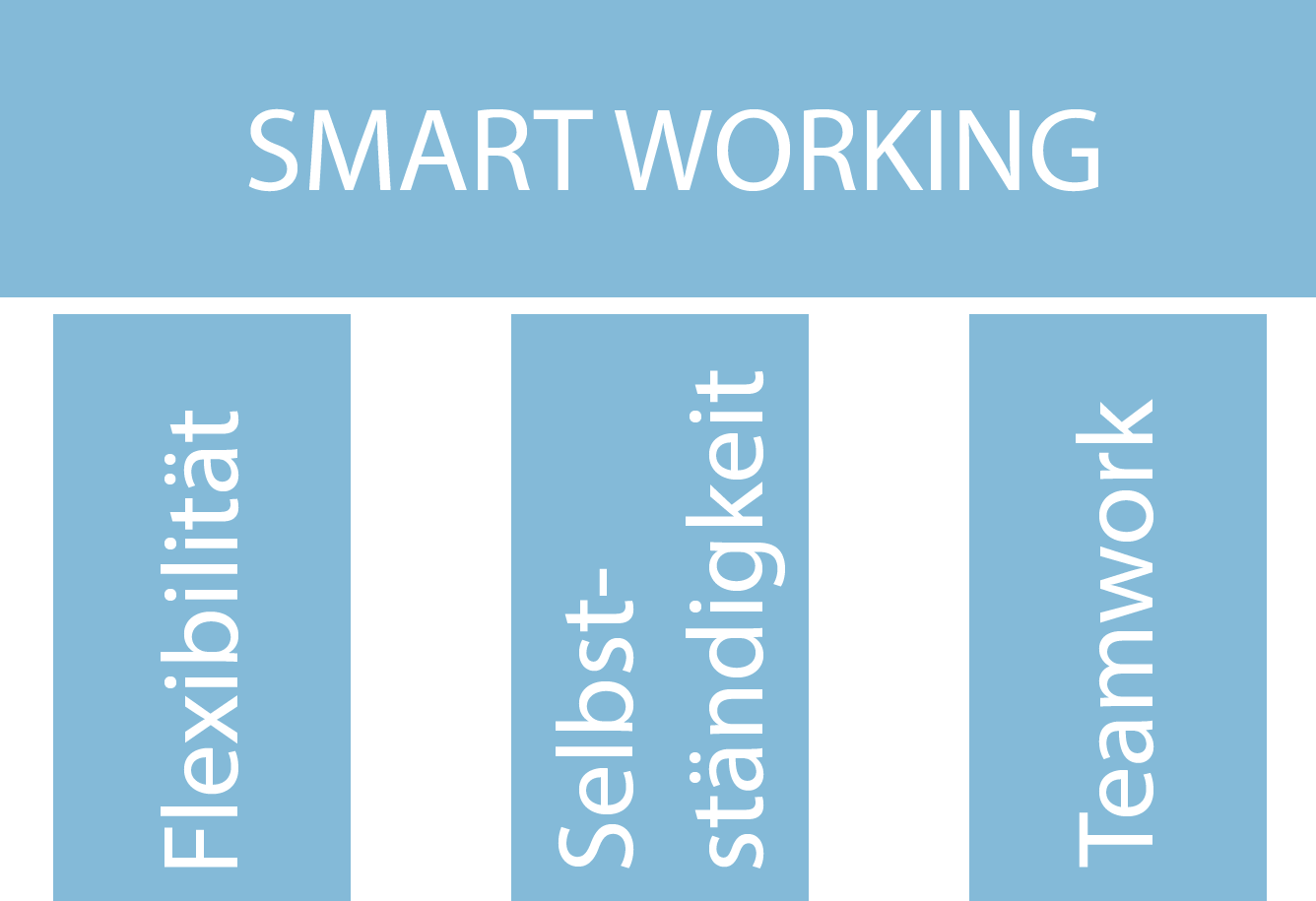
Figure 1. The pillars of smart working: flexibility, independence and teamwork with the help of the latest technologies.
THE DISADVANTAGES OF SMART WORKING
If you look closely and read the small print, you cannot fail to notice that smart working has disadvantages too. Two stand out clearly: the costs for the employee and the risk of overwork.
The costs
While in classic office work the equipment, electricity, water and occasionally food are provided free of charge, these expenses have to be borne by employees themselves if they want to work away from the company.
That may seem negligible, but calculated over a year the total for water, lighting, heating and home-cooked meals is considerable.
Working equipment such as laptops, printers, software and so on is also sometimes provided privately by employees. Although these days you can assume that the majority of the working-age population in central Europe owns a computer, companies, depending on the industry, expect that equipment to be up to current technical standards.
As already mentioned earlier in the article, however, spending on travel goes down. So whether smart working means higher annual costs or not varies from person to person.

The risk of overwork
Smart working is characterised, among other things, by goal-oriented work. Sometimes this principle is taken so far that working time plays a subordinate role to reaching the goal, in other words "however long it takes you, the goal has to be reached by X".
If you work quickly, if the subject is your particular strength, or if you make rapid progress for other reasons, you gain time. After all, you are paid for the agreed period, regardless of how long you actually work to reach the goal.
But it can also happen that the time is badly estimated, that problems arise, or that colleagues work in different time zones and progress suffers as a result. If the goal has the highest priority, the framework of the agreed working hours can burst. Employees feel forced to work longer because they are "at home anyway".
For decades now people have been warned not to take work home with them. If that was, and still is, a real danger in the classic working model, it is all the more present when you work smart.
WHAT DO YOU NEED FOR SMART WORKING
As is always the case, freedom brings responsibility with it. Certain skills have to be particularly well developed, or absolutely must be developed further, in order to make the most of all the advantages of smart working. Forward planning and medium and long-term goals must not be neglected under any circumstances. Strong project management makes it possible to coordinate a team that is separated in both time and place.
The environment at home also has to be right in order to maximise your own productivity. When you work in familiar surroundings, it is easy to be tempted into doing other tasks on the side. Putting a wash on, fixing something small or squeezing in a short decluttering session. And when the children are at home, staying focused becomes even harder.
In the world of smart working, organising your time is left to you as the employee, so the risk of the overwork mentioned above is very real and can only be avoided through good time management, structured work and deep work phases.
SMART WORKING AND WORKING FROM HOME
Working from home is a verbal, or occasionally written, agreement that allows an employee to work from home for a period. That can be an exceptional arrangement or a long-term solution. In most cases proportional models are offered, e.g. 30% from home and 70% in the office. Some companies, however, also offer 100% home working.
The equipment is provided by the company, working hours are fixed by agreement and correspond to normal office hours. The flexibility lies in being able to work outside the office.
This working model is particularly appreciated by parents and by everyone with a long commute.
Smart working means maximum flexibility when it comes to working hours and how work is organised. Beyond that, the focus lies on decentralised teamwork thanks to the latest technologies.
Smart working is therefore more than working from home. It is a completely new way of working that has gained significance through the pandemic and that is likely to become more and more important over time.
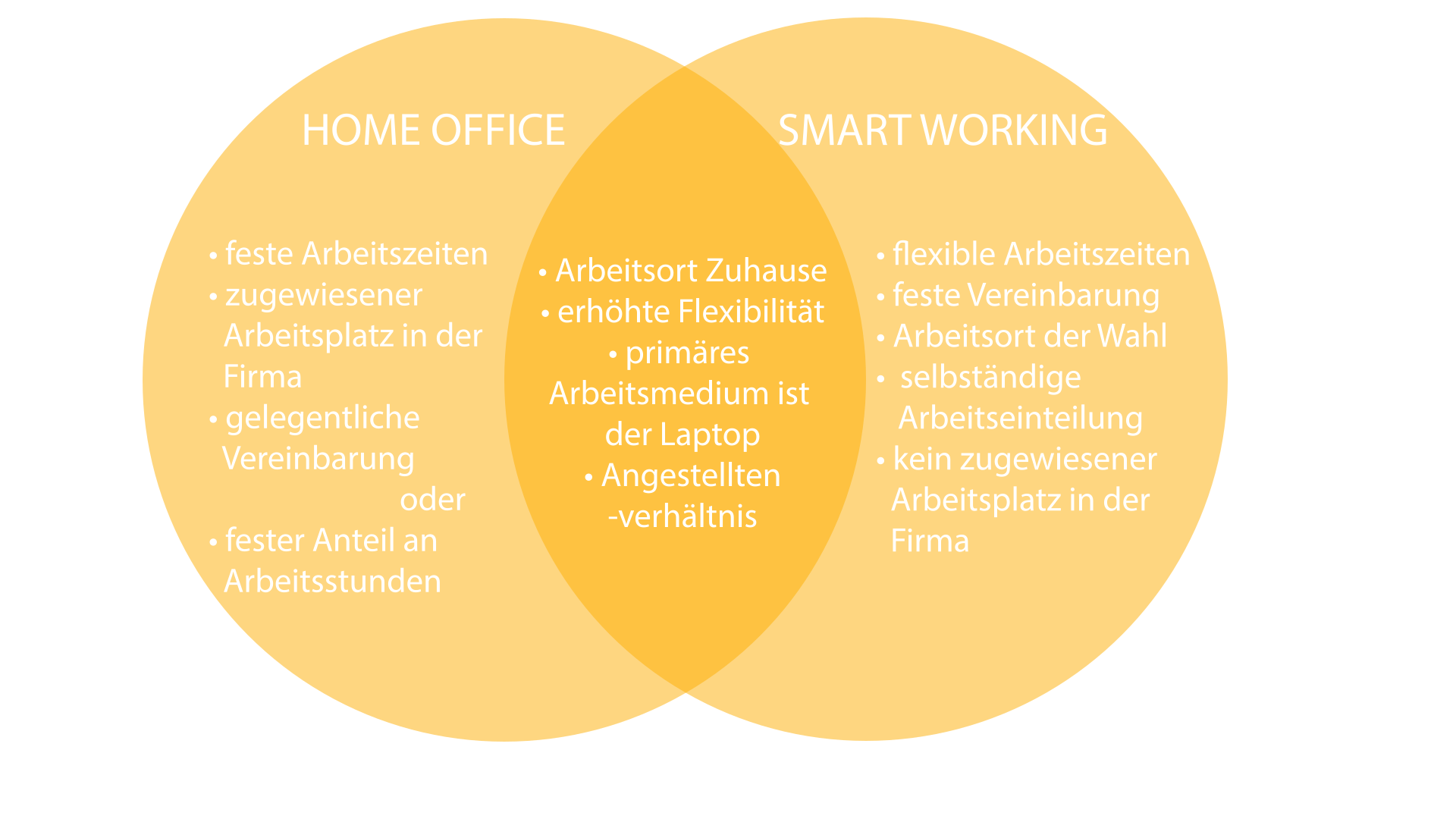
Figure 2. Differences and similarities between working from home and smart working.
CONCLUSION
Smart working can be seen as a hybrid between employment and freelancing. The place and hours of work can be determined in absolute freedom, while at the same time you carry full responsibility for reaching the project goal.
A number of disadvantages come with smart working. Above all overwork, when you work without a plan, when the workload has been badly estimated, or when ambition stops you drawing boundaries between work and private life.
Elena Kroll
Writes at ELECOS about websites, data protection and productive working.